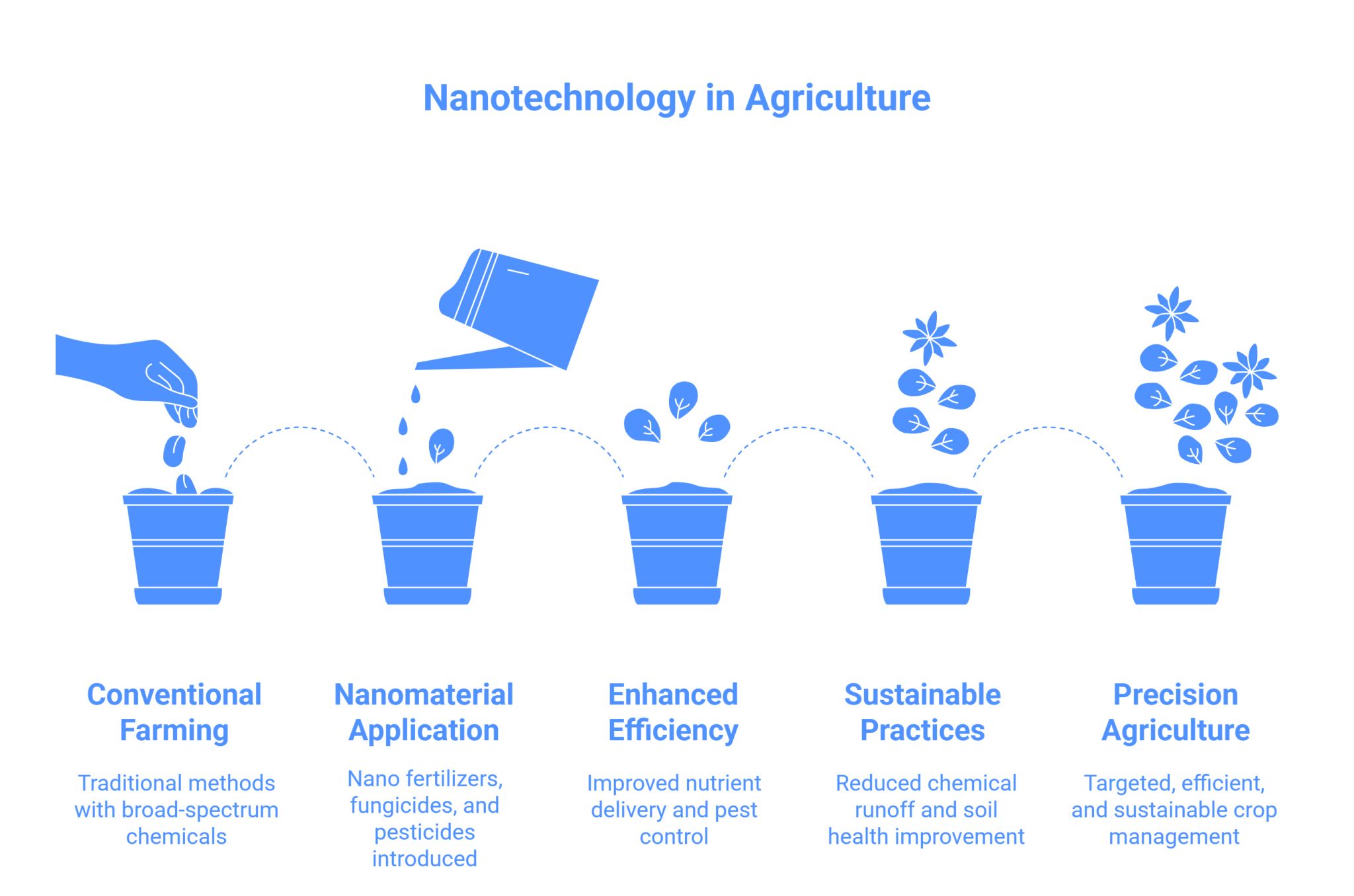
While most farmers are focused on acres, a quieter revolution is happening at the molecular level.
🔥 UNPOPULAR OPINION: Nanotechnology will do for agriculture what smartphones did for communication.
The numbers are staggering
📈 Nano fertilizer market: $3.7B → $14.3B by 2035 (nearly 4x growth!) 💰 AgriTech VC funding projected to exceed $30B in 2025 🌱 Field trials showing 20-50% improved nutrient uptake 🎯 30% reduction in pesticide application rates with BETTER results
What are we actually talking about? Nanoscale materials (1-100 nanometres) engineered for:
UmaHari products are Listed by OMRI, approved for use in organic farming systems. Our formulations are designed with safety and sustainability in mind:
- Fertilizers with controlled nutrient release
- Fungicides with targeted delivery mechanisms
- Pesticides that break down after use
Why it matters:
Traditional agriculture wastes 50-70% of applied inputs to leaching, volatilization, and runoff. Nano formulations change this equation entirely.
Real-world results from recent trials:
🌽 Corn & Soybeans: 20-50% improved nutrient uptake (Nano-Yield® trials)
🌾 Teff in Ethiopia: Significant yield gains with better nutrient retention
🍃 Fungicide trials in Asia-Pacific: 30% less chemical, equal or better disease control
The regulatory landscape:
🇺🇸 EPA: Regulating under FIFRA with rigorous risk assessments
🇪🇺 ECHA/EFSA: Integrating into Farm to Fork sustainability strategy
🌏 Global: ISO standards emerging for testing protocols
The paradox: Market growing 4x in 10 years, yet only 60% of ag-focused VCs investing. Why? Regulatory complexity and long validation timelines.
What's next:
→ Digital agriculture platforms
→ IoT sensors and monitoring
→ Drone-based precision application
→ Controlled environment agriculture (CEA)